Do the Slaughtering and Processing of Beef Happen at the Same Place
Home Slaughtering and Processing of Beef
- Leap To:
- Preparing for Slaughter
- Equipment Needed for Slaughter
- How to Stun Animate being
- How to Bleed Animal
- How to Skin Animal
- Opening the Carcass
- Splitting the Carcass
- Cutting Beefiness
- Forequarter
- Hindquarter
- Packaging Beef for the Home Freezer
- How to Wrap
- Labeling
- Freezer Storage Time
- Thawing Frozen Meat
- Cooking Frozen Meat
A beef beast selected for slaughter should be salubrious and in thrifty condition. Continue the creature off feed 24 hours before slaughter, but provide free admission to water.
Do non run or excite the brute prior to slaughter because this may cause poor bleeding and give the carcass a encarmine appearance.
The weather, especially expected temperatures the few days following slaughter, is extremely important. Night temperatures should be 32°F or lower for the carcass to chill properly without refrigeration.
The meat will spoil if improperly chilled and stored during warm atmospheric condition. Likewise, during extremely common cold conditions, the meat should exist protected from freezing by covering it with a make clean cover.
Preparing for Slaughter
Slaughter should be done in a dry, clean, grit-free area. A well-drained grassy area is recommended.
Take precautions during slaughter, chilling, and processing to keep the carcass and cuts clean and free from contagion. Use clean equipment, proceed hands clean, article of clothing make clean wear, and keep work and storage areas clean.
The carcass tin be chilled without refrigeration by hanging information technology in a dry, clean building. Freedom from odors or contamination is essential.
Most meat spoilage and off-odors and flavors can be attributed to one or more of the following causes:
- Improper chilling of the carcass. The internal temperature of the circular and other thick parts should be lowered to forty-45°F within 24 hours after slaughter.
- Adsorption of off-odors. When the carcass is chilled and aged in an area with whatsoever odor (manure, gasoline, paint, musty odor, etc) the carcass will absorb it.
- Poor sanitation during slaughter, spooky, and processing. This contamination with microorganisms causes off-odors, off-flavors, and spoilage.
- Improper freezing and storage of frozen meat. Packaged meat should be quick-frozen and stored at 0° to five°F. Home freezers are for storage of products already frozen, not for quick-freezing big quantities of meat. Small quantities, preferably less than 25 pounds, can be satisfactorily frozen at home by placing meat in the freezer with at to the lowest degree one inch of space betwixt each package.
Equipment Needed for Slaughter
The minimum required items of equipment for dwelling slaughtering are as follows.
- Stunning device such as 22 caliber burglarize.
- Block and tackle, chain hoist, or tractor equipped with hydraulic lift.
- Beef spreader (singletree equipped with hooks on both ends and a ring in the centre volition exercise).
- 24- or 28-inch meat saw.
- 6-inch abrupt skinning knife, 6-inch boning knife, and viii-inch butcher pocketknife.
- 10- or 12-inch steel bucket to hold water for washing hands.
- Aplenty make clean water and make clean hand towels.
How to Stun Animal
Kill the animate being as humanely every bit possible. If a rifle is used, exercise recommendations for condom use of firearms. The proper place for the bullet to strike is at the intersection of two imaginary lines extending from the right horn or anima, border of poll to the left eye and from the left horn or border of poll to the right eye (Figure i). A sharp blow at this point with a sledge hammer will also stun the creature.
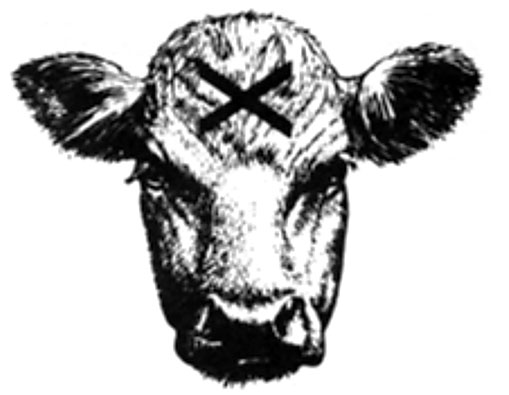
Effigy 1. Proper point for stunning brute.
How to Bleed Animate being
Equally before long equally the brute is down, bleed it without delay. Stand behind the animal equally in Effigy two and with the sharp skinning knife make an incision through the hide in the heart of the dewlap immediately in front end of the breastbone.
Hold the knife so the bespeak is directed toward the rear of the animate being, insert the pocketknife nether the breastbone toward the rump of the animal and cut toward the backbone. This will cut the arteries that cross merely below the point of the breastbone.
Be conscientious non to stick also deep into the breast cavity. Cut straight with the backbone. Pump the foreleg back and along a few times to assist bleeding.
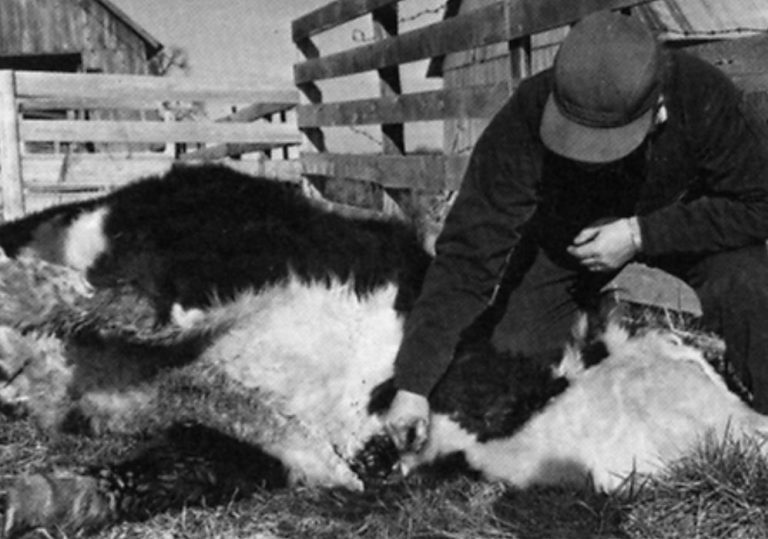
Figure 2. Drain the animals without delay following stunning.
How to Skin Animal
Turn the creature on its back and identify a brusk prop (foursquare post) on either side to concord it in that location. Remove the forefeet and shanks at the knee as in Effigy 3 past locating and cutting through the flat joint with a knife. Pare out the hind legs and remove the hind feet and shanks by sawing as in Effigy 4.
Next, split the hide from the opening in front of the brisket down the midline of the abdomen to the bung. Concord the skinning knife at a slight bending as in Figure v.
Then split up the hibernate at the rear of each hind leg beginning where the shank was removed, moving to the udder or scrotum. Do non skin the outside of the hind legs nor front legs until the carcass is being hoisted. The intact hide will proceed the shanks clean during hoisting.
The next role of skinning is known as "siding." Begin the siding past sliding the knife under the pare that has been cutting over the belly. Grasp the loosened hibernate with hand (hair side is easiest to hold) and pull it up and outward. Place the pocketknife firmly against the hibernate with the cutting border turned slightly toward the hide every bit in Effigy 6.
Apply long, smooth strokes of the knife, to remove the hide downward over the sides. This is i of the most difficult tasks in skinning.
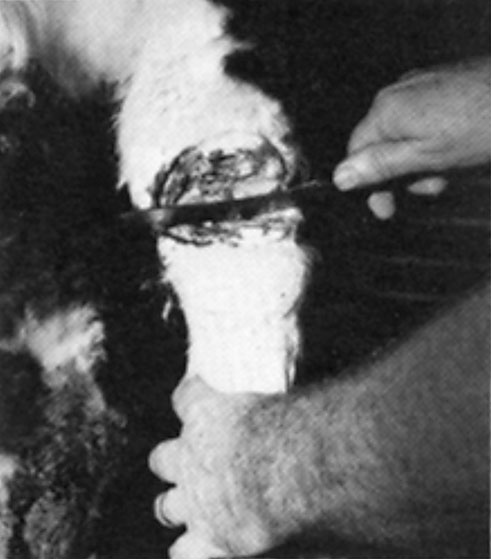
Figure iii. To remove the forefeet and shanks, cutting through the flat joint.
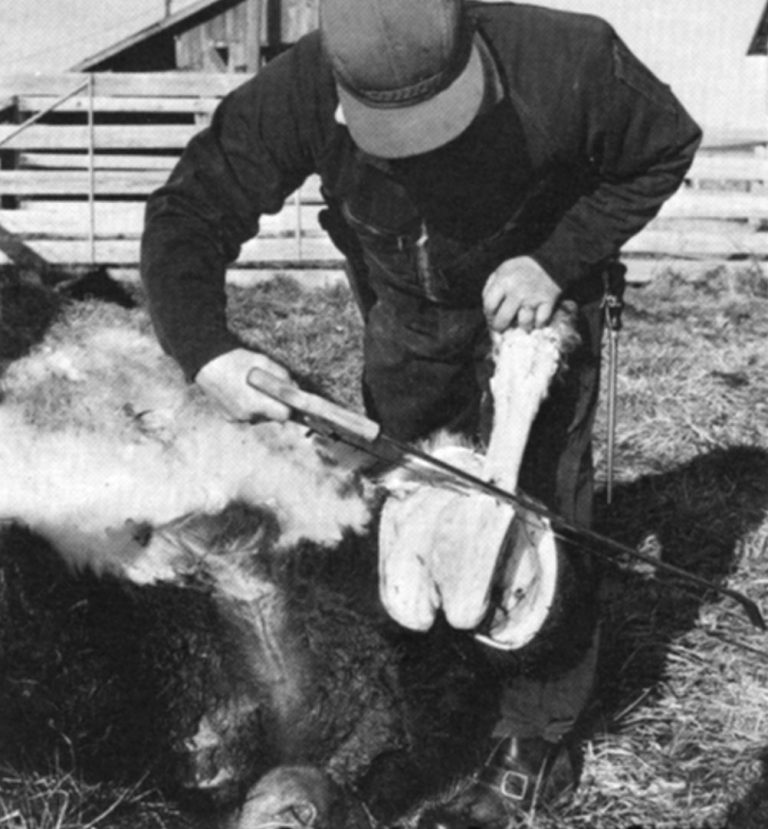
Figure 4. Saw off the hind feet and shanks later skinning out the hind legs.

Figure 5. Split the hide by property the skinning knife at a almost flat angle.
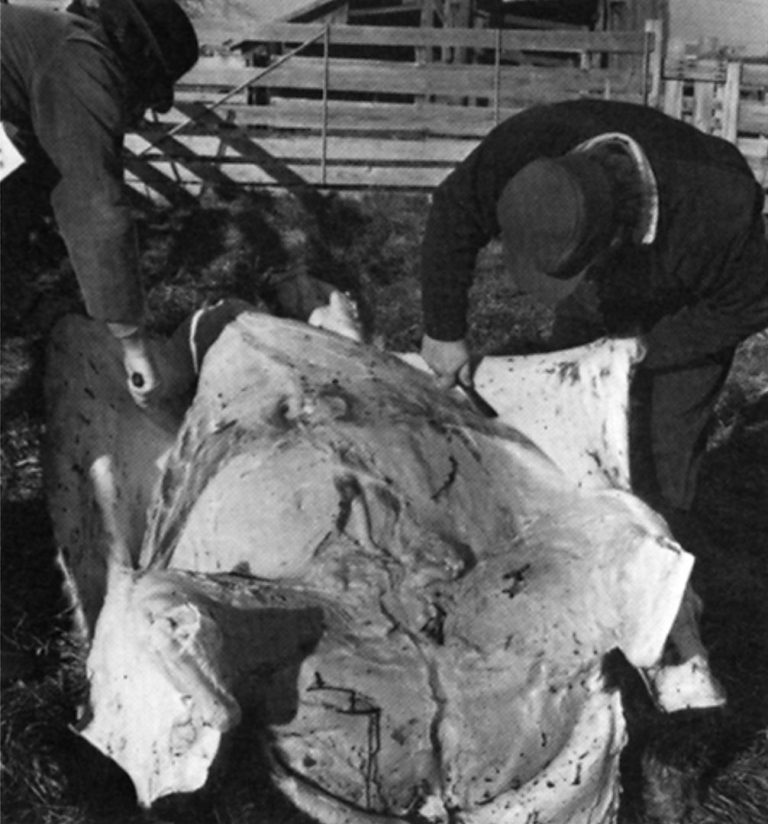
Figure half dozen. Apply long, smooth strokes with the knife when skinning. Keep the knife firmly against the hide with the cutting edge slightly toward the hibernate.
Opening the Carcass
Subsequently siding is done, cut through the middle of the brisket with a knife and saw through the breastbone as in Figure 7. Insert the handle of the knife in the abdominal cavity with the blade leaning astern to open the abdomen crenel equally in Effigy 8. In example of a male, remove the penis before opening the carcass.
The inside of each round musculus over the pelvis is covered with a thick white membrane. Follow this membrane and avoid cut into the muscle. The pocketknife can be forced betwixt the soft cartilage that joins the pelvic bone. See Figure ix. In older animals, the pelvis must be sawed.
The carcass is now ready for hoisting. Insert the hooks of a beef spreader or singletree in the tendons of the hind legs every bit in Figure x. After the carcass is partially hoisted, complete skinning the rounds and the back of the carcass.
Remove the hurl past cutting effectually it on the two sides and back and pulling through the opening of the pelvic crenel. Continue pulling the bung and intestines and cutting the ligaments that attach the intestines to the back as in Figure 11.
Pull down on the paunch to tear it loose from the carcass, cut the esophagus where it goes through the diaphragm, and let the intestines and paunch to drop into a container or on the basis. The liver should still exist fastened to the carcass and tin side by side be removed. Remove the gall bladder from the liver.
Continue hoisting the carcass until the head clears the footing as in Figure 12. Remove the heart and lungs by first cutting out the diaphragm, the white connective tissue that separates the abdominal and thoracic cavities. Grasp the middle and lungs, pull frontward and downwards, and cutting the large blood vessel fastened to the backbone. Remove the heart, lungs, and esophagus equally one unit.
Complete skinning the carcass and remove the head. The head is removed by cutting beyond the neck above the poll and through the atlas joint as illustrated in Figure xiii.
Advisedly examine all the internal organs and the dressed carcass for any abnormalities or conditions (such as abscesses or inflammation) that might affect the wholesomeness of the meat.
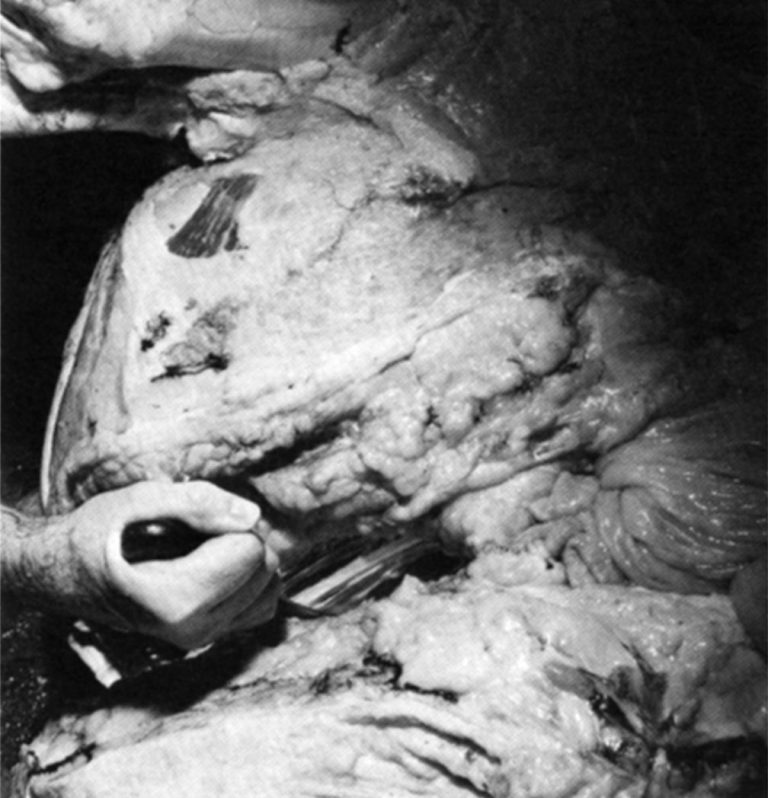
Effigy nine. To separate the rounds, cut along the thick white membrane at the pelvis.
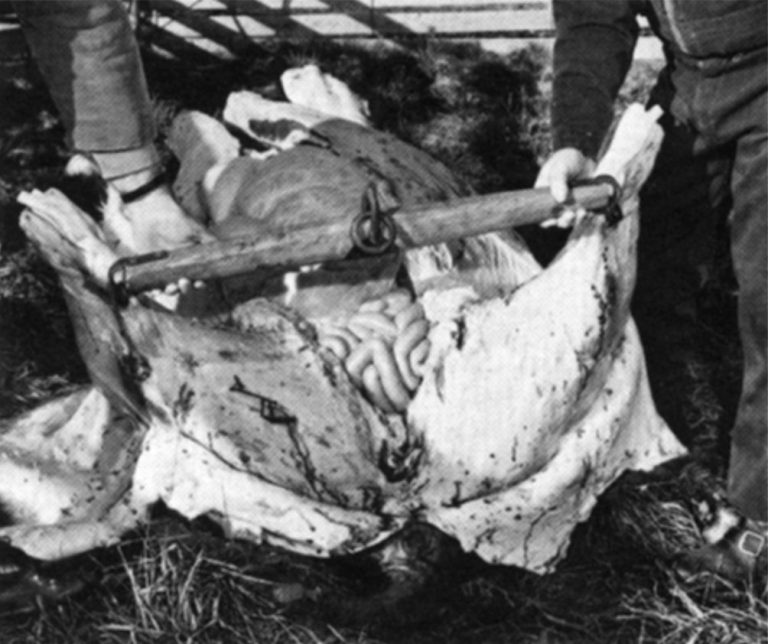
Figure x. Carcass ready for hoisting with singletree hooked in the tendons of the hind legs.
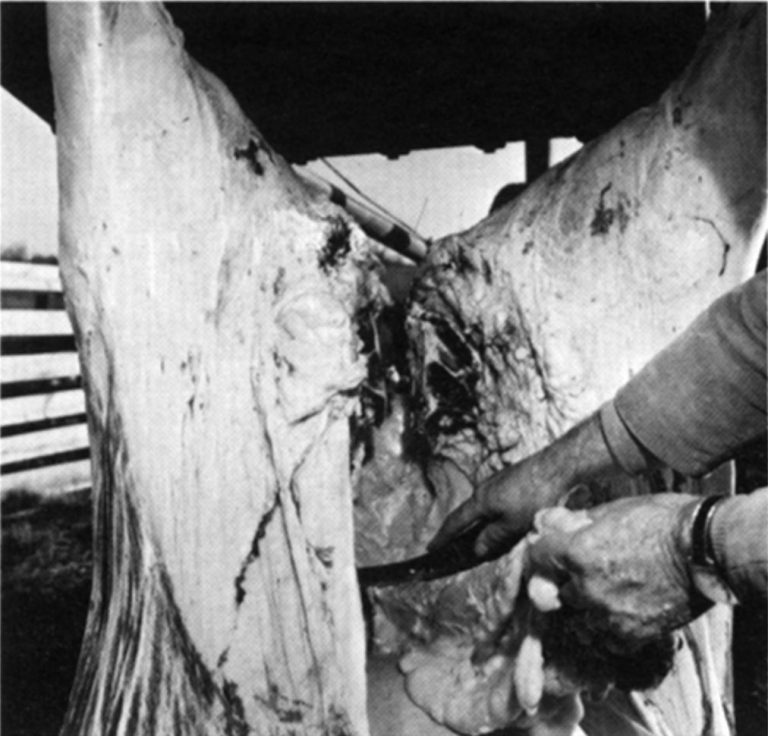
Figure 11. Removing the hurl by cutting along the two sides and back and pulling it through the pelvic opening.

Effigy 12. Carcass hoisted with head clearing the ground, ready to consummate skinning and to remove the caput.
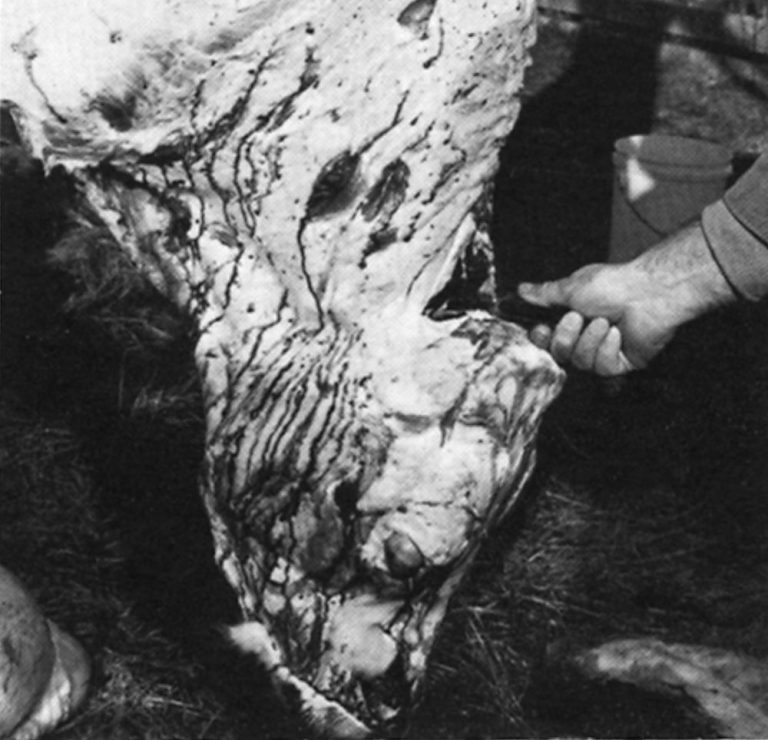
Figure 13. Head is removed by cut beyond the neck above the poll and through the atlas joint at the base of the skull.
Splitting the Carcass
The carcass should be divide into 2 sides. Start the splitting by first sawing through the sacral vertebrae from the inside every bit in Figure 14. As soon as the cut is made through the pelvic area, sawing can be done easier from the back as in Effigy 15. Make the split down the center of the courage to the neck. Exit the neck fastened equally in Figure 16 to balance the sides on the singletree.
Trim any soiled, hobbling, or bloody pieces of meat. Wash the carcass with cold h2o to remove whatever remaining blood and clay. Pump the forelegs upward and down a few times to aid in draining blood from the forequarters.
To improve the appearance of the carcass, shroud it tightly with wet, clean white muslin to shine the exterior fat during chilling. Use skewers or ties to tighten the shroud.
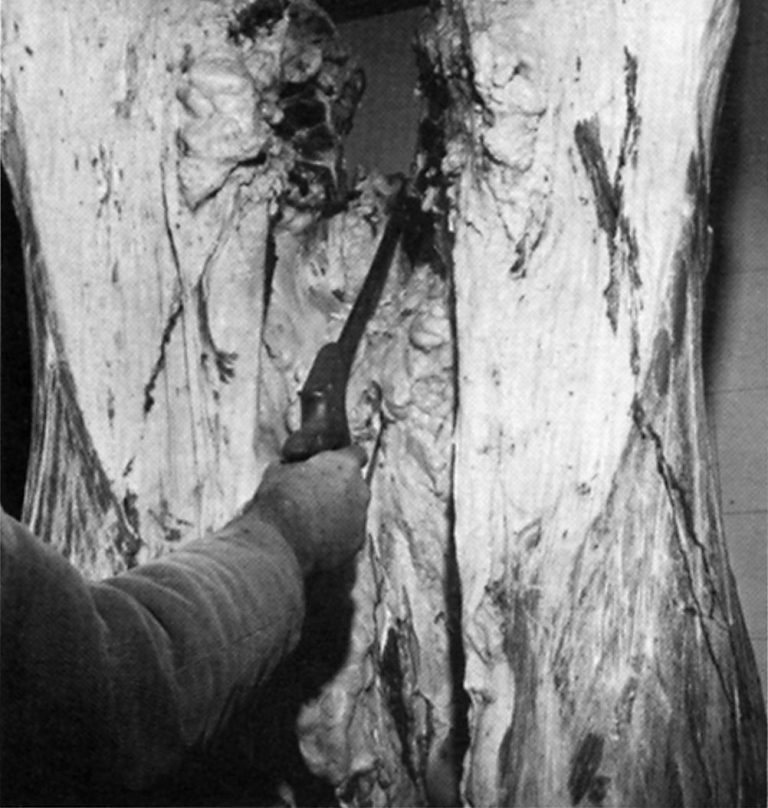
Figure 14. Brainstorm splitting the carcass by start sawing through the sacral vertebrae. Also encounter Figure fifteen.
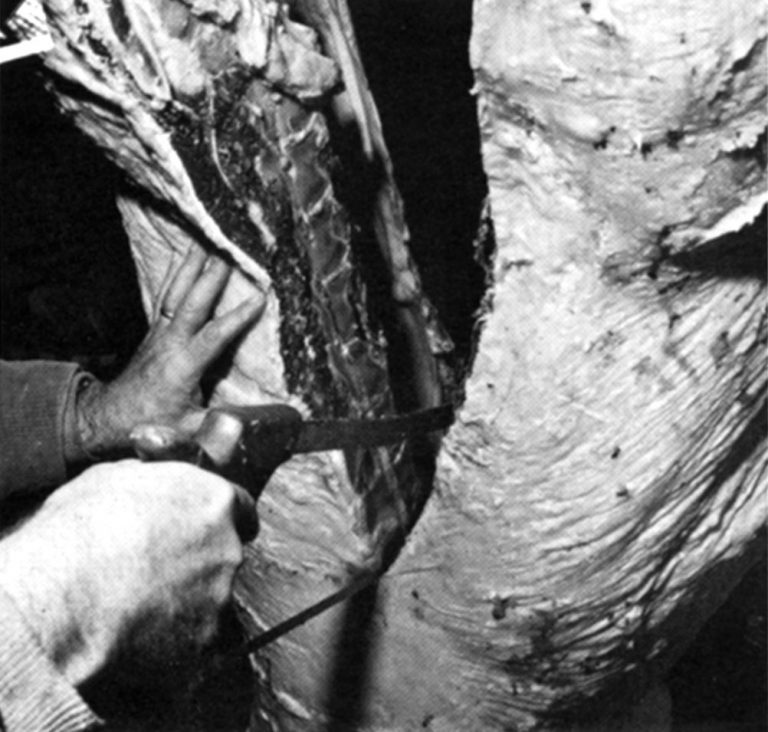
Figure xv. When the pelvic area has been split, sawing is more easily done from the behind of the carcass.
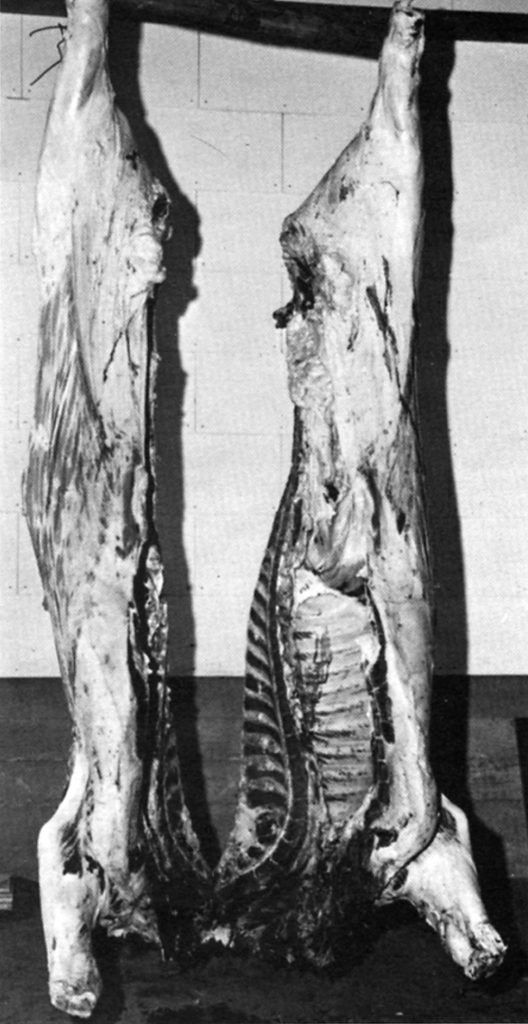
Figure sixteen. Split the carcass to the neck, but leave the area attached to balance the 2 sides on the singletree.
Cutting Beefiness
Beefiness should be aged a few days earlier cutting. The amount of crumbling volition depend on the corporeality of fat covering, desired flavor, and temperature.
Carcasses that have only a thin fat covering should be aged three to five days; those with more fat, five to seven days. Very little tenderization occurs after 5 to seven days. Longer aging may event in off-flavors and odors due to microbial growth.
If the temperature of the carcass rises above 40°F, the time required for aging is reduced. Also, chances of spoilage are increased.
The sides of the carcass are quartered by cutting betwixt the 12th and 13th rib (Figure 17). Following is a mutual procedure for cutting the quarters into wholesale cuts.
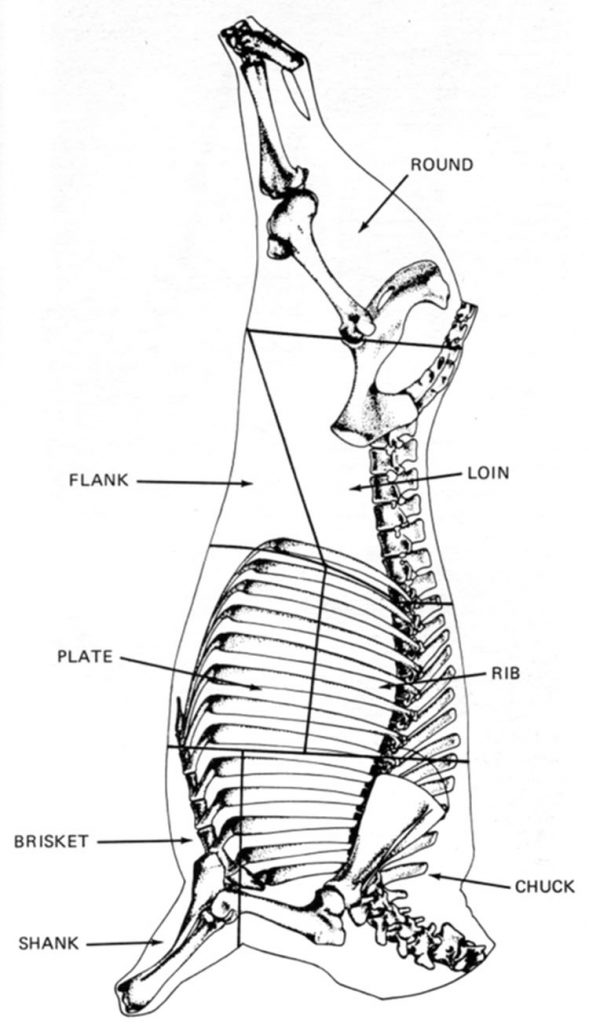
Effigy 17. Wholesale cuts of a beef side in reference to the skeleton.
Forequarter
Remove the rib and plate from the chuck and brisket by cutting between the fifth and sixth rib. Cut perpendicular to the top line of the carcass. Separate the rib cut from the plate at a point 11/2 inches beneath the rib eye musculus on the stop where the side was quartered, and cut parallel to the back.
The rib may be cutting into rib steaks by cutting the desired thickness. The larger part may be made into a roast, or the entire cut boned into boneless rib steaks or roasts. The rib cuts are rather tender and may be broiled or dry roasted.
The plate may be processed past cutting two or three rows (11/2-ii inches) of brusque ribs and the remaining boned for basis beefiness.
To remove the brisket and foreshank from the chuck, first locate the arm bone articulation almost the surface of the carcass. Cut about 1 inch above the top of the joint, perpendicular to the cut made when the quarter was first divided (Effigy 17).
The brisket may be separated from the shank past cutting through the natural seam that joins them. The shank is usually boned for grinding simply cantankerous-cut shank or soup bones may be made. The brisket should be boned for a roast or for grinding.
The blade end of the square-cut chuck may be cut into steaks or roast.
The arm stop of the chuck may be cut into steaks or roasts. The neck portion tin can best be used for ground beef.
Hindquarter
The hindquarter should be placed on the cutting table with the outside down.
The flank is removed by starting the cut on the round most the cod area post-obit the circular musculus. Cut closely to avoid cutting into the lean on the circular almost the stifle joint. Continue the cut forwards on a line to a point 2 or iii inches beneath the loin heart muscle at the 13th rib.
The flank steak, the prominent musculus on the inside virtually the center of the flank, may exist stripped out for a steak and the remaining lean trimmed for grinding.
Separate the loin from the round by cut betwixt the fourth and fifth sacral vertebrae at a point approximately 1 inch in front of the aitch bone. The loin should then exist cut into steaks. Begin cutting at the sirloin end and cut toward the small end of the loin.
Remove the rump by cutting parallel to the 2 ends of the aitch os and just behind the aitch bone. The rump is usually boned and tied for roasts. The sirloin tip is removed past post-obit the circular boned to the human knee cap. The tip can be used as a roasts or steaks.
The remainder of the round may be cutting into steaks or roasts almost hands by separating the top and bottom round. The hind shank should be boned for ground beef.
Packaging Beef for the Home Freezer
Successful freezing depends on proper packaging to protect foods in freezers.
Ordinarily Kraft or waxed papers practice not fairly protect foods in freezers. Use moisture-vapor-proof material, designed especially to wrap foods for freezing. These materials are stiff, easy to handle, resist grease, are moisture proof, and will non transfer odors. Plastic and Kraft laminated fabric is probably the about economical and is easiest to use in most cases.
How to Wrap
The drugstore fold is the approved method to seal the moisture in and air out. To brand the drugstore fold:
- Identify the meat in the heart of the paper.
- Bring the two horizontal ends together and fold over until tight against the meat.
- Tightly fold one stop, so the other, turn each cease underneath, and secure with record.
For easier separation of steaks when frozen, place a double thickness of waxed or freezer paper between each slice with plastic sides to the meat. Earlier packaging remove or cover sharp bone edges with double thickness of freezer paper and so they will not puncture the wrapping paper.
Labeling
Label each parcel clearly with a crayon or grease pencil. Include the name of the cut, the quantity, and the packaging engagement.
Freezer Storage Time
The maximum recommended period of freezer storage for beef is nine months.
Thawing Frozen Meat
For best results, thaw in original package in the fridge. Allow approximately three hours per pound for small roasts and steak packages, and four to v hours for larger roasts. If thawed at room temperature allow ane hour per pound.
Cooking Frozen Meat
Frozen meat may be cooked satisfactorily either by thawing prior to or during cooking. When cooking steaks or roasts from the frozen land, permit additional cooking time.
Frozen roasts require approximately a tertiary longer for cooking than roasts that have been thawed. Allow additional time for cooking steaks or ground beef patties compared to thawed cuts. When broiling place frozen steaks and ground beef patties farther from the heat or at a lower temperature than thawed cuts and then the meat volition be cooked to the desired caste of doneness without becoming besides brownish on the out-side.
Harold R. Hedlick and William C. Shingel
Department of Food Science and Diet
Maurice Alexander
Quondam Creature Science Specialist
Was this information helpful?
YESNO
Source: https://extension.okstate.edu/fact-sheets/home-slaughtering-and-processing-of-beef.html
0 Response to "Do the Slaughtering and Processing of Beef Happen at the Same Place"
Post a Comment